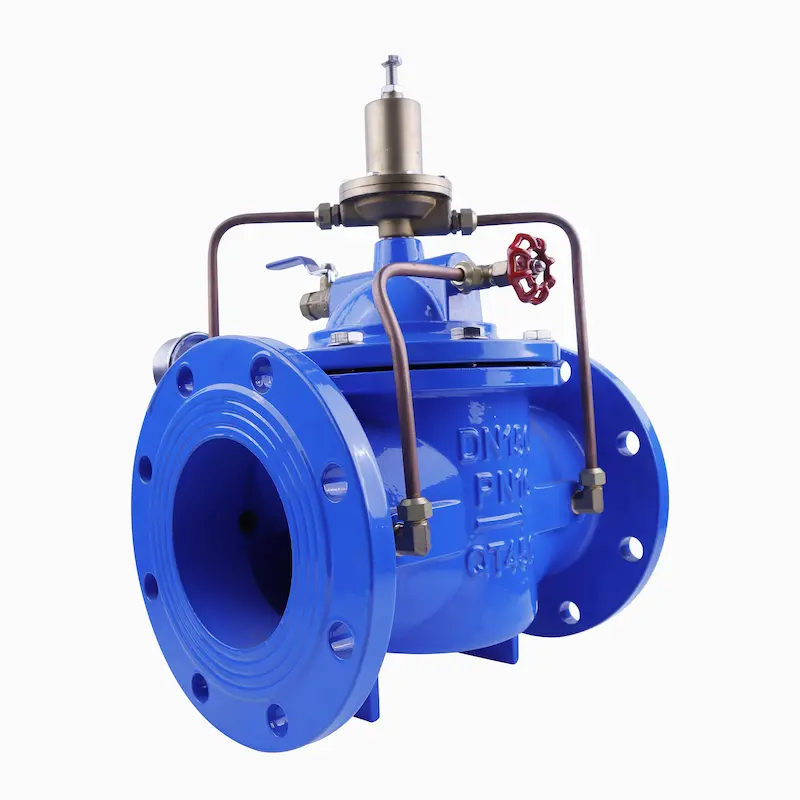
Pressure Reducing — 200X
Controls the pressure downstream of the valve. Outlet stays at your set point regardless of how the inlet pressure moves — the standard choice for stepping a high-pressure main down to a safe working pressure.

ZPVE manufactures hydraulic control valves — also called automatic control valves — for municipal water networks, pumping stations and fire protection systems. One ductile iron valve body covers nine control functions: swap the pilot and the same valve reduces pressure, holds a tank level, or shuts down a pump without water hammer.
No actuator. No power supply. No control panel to wire in — the valve runs on the pressure already in your pipeline. Tell us your line conditions and we'll confirm the right size and set point before we quote.
| Parameter | Range | Notes |
|---|---|---|
| Size Range | DN6 – DN3000 | Across all four valve types |
| Pressure Class | Class 150 – 4500 / 1.0 – 50 MPa | Matched to body material and design standard |
| Temperature | −196°C to 1300°C | Limited by seat material on individual models |
| Body Material | Ductile iron, carbon steel, stainless steel | Selected per medium, pressure and temperature |
| Seat & Seal | Resilient soft seat or metal-to-metal | Per service medium and temperature |
| End Connection | Flanged, butt-weld, socket-weld, threaded | Per piping specification |
| Body Coating | FBE, ≥250 microns | Fusion-bonded epoxy, inside and out, on ductile iron bodies |
| Operation | Automatic | No actuator, no power supply required |
| Testing | 100% shell & seat test | Every valve tested before it ships |
| Design & Test Standard | GB, API, ASME, ANSI, JIS, BS, DIN | Confirmed at order entry |
| Approvals | WRAS · CE · EAC · PCT | Certificates issued with every shipment |
| Warranty | 12 months | Term confirmed at contract |
Selection Guide
A hydraulic control valve is defined by which pilot is fitted to the main valve — swap the pilot and the function changes. The six functions below cover our full platform, built to the pressure, flow and set point on your line.
Controls the pressure downstream of the valve. Outlet stays at your set point regardless of how the inlet pressure moves — the standard choice for stepping a high-pressure main down to a safe working pressure.
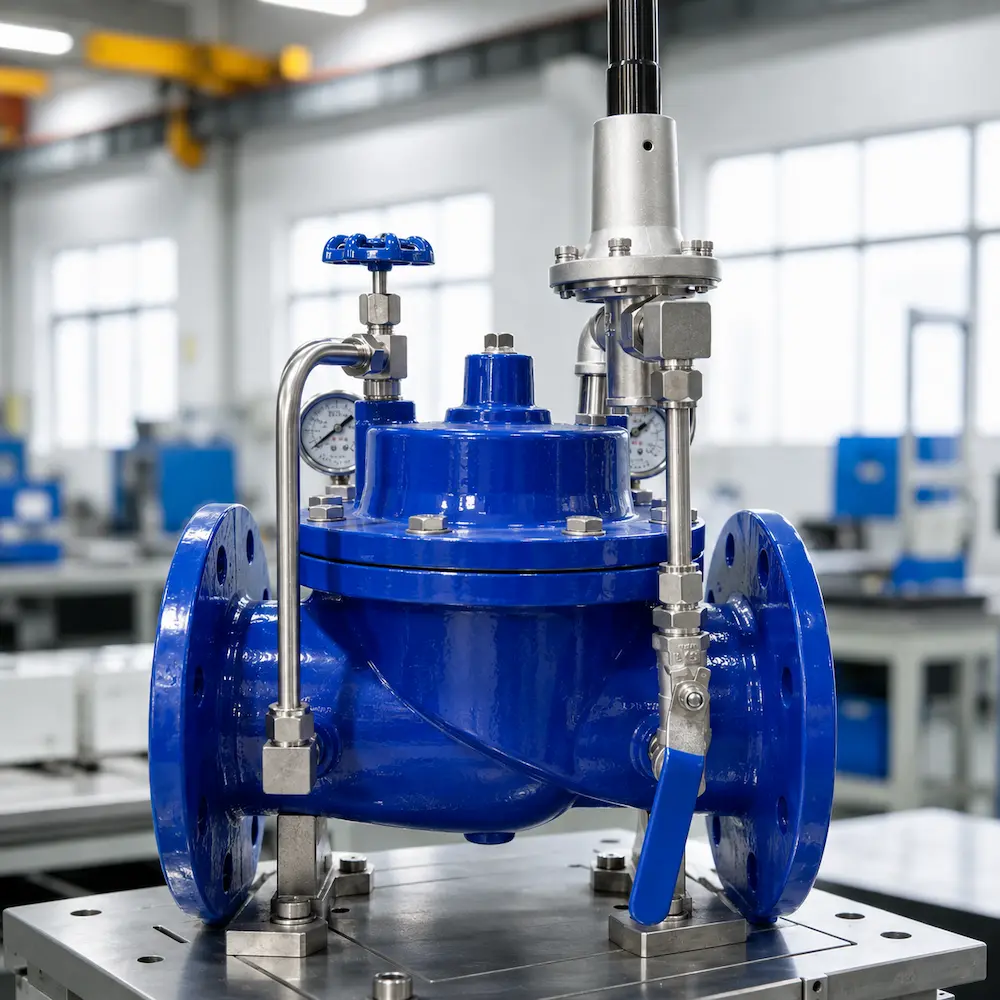
Controls the pressure upstream of the valve — the opposite of a reducing valve. It relieves excess inlet pressure to protect the line, or holds a minimum inlet pressure to protect a pump or a fire main.
Holds a tank or reservoir at a set level. A float — mounted on the valve body or piped out to the tank — opens the valve as the level drops and closes it as the level rises, with no float switch required.
Holds outlet flow at a set maximum, regardless of upstream pressure. Fitted where a downstream system, or a downstream meter, cannot tolerate flow above a fixed rate.
Opens and closes in step with the pump, and closes slowly enough on shutdown to stop the pressure spike that would otherwise hit the pump and the pipeline — the two valves most often specified together at a pump station.
Opens and closes on an electrical signal rather than a fixed pilot setting — for scheduled operation, remote control from a SCADA system, or an emergency shut-off that has to fire the instant a signal arrives.
Where It's Installed
Each valve controls one variable in the line.
Six places a hydraulic control valve earns its keep — from district metering inlets to pump discharge and rooftop tanks. Each card shows where it installs, what it controls, and the failure it prevents. Send us your line conditions and we confirm the model.
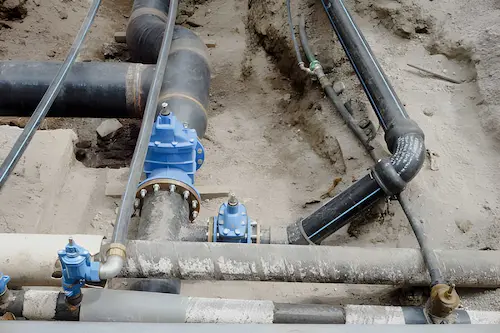
District metering area inlet
Zone riser inlet
Fire pump outlet and hydrant zones
Pump discharge
Tank and reservoir inlet
Supply-to-return bypass
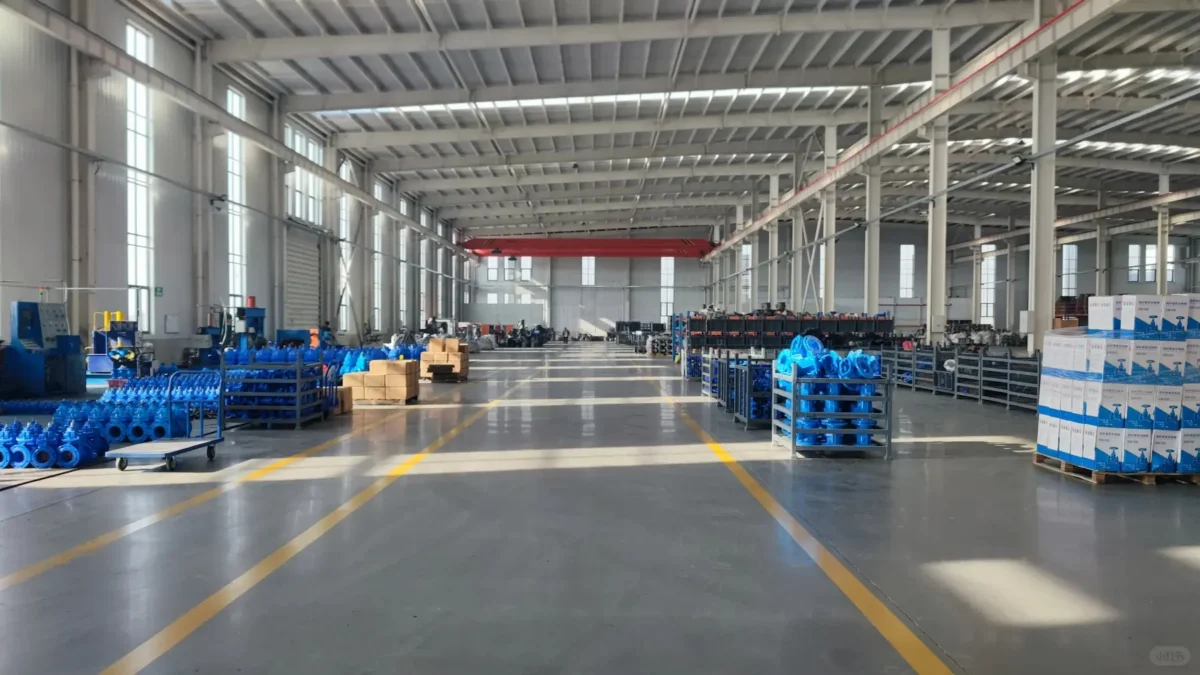
Six steps from raw casting to a valve tested and set to your line conditions, all completed on our own production floor.
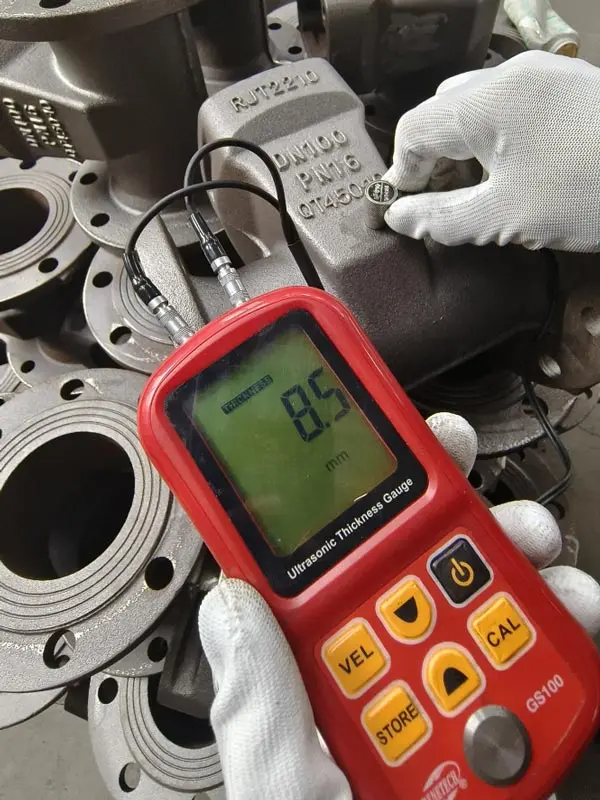
The main valve body is cast in ductile iron, heat-treated and shot-blasted before it goes anywhere near a machine.
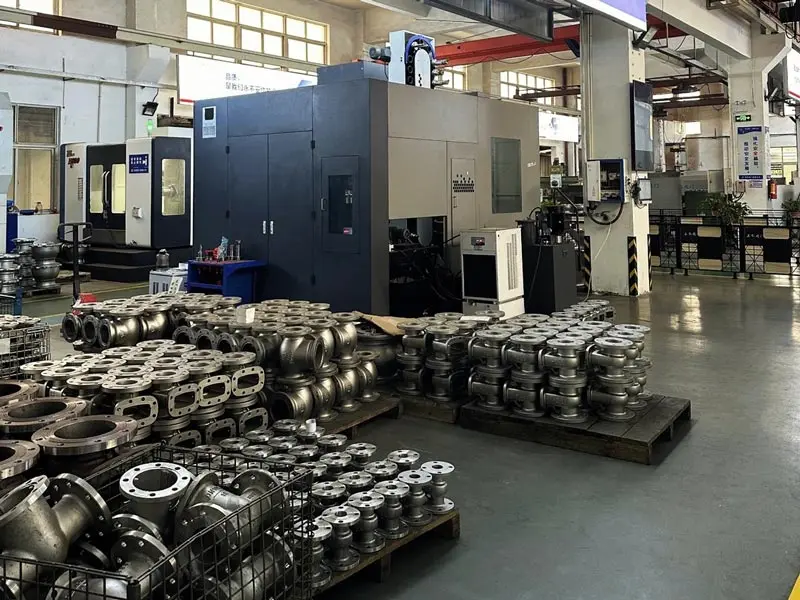
Body, seat and bonnet faces are CNC machined to the tolerance the diaphragm needs to seal drop-tight.
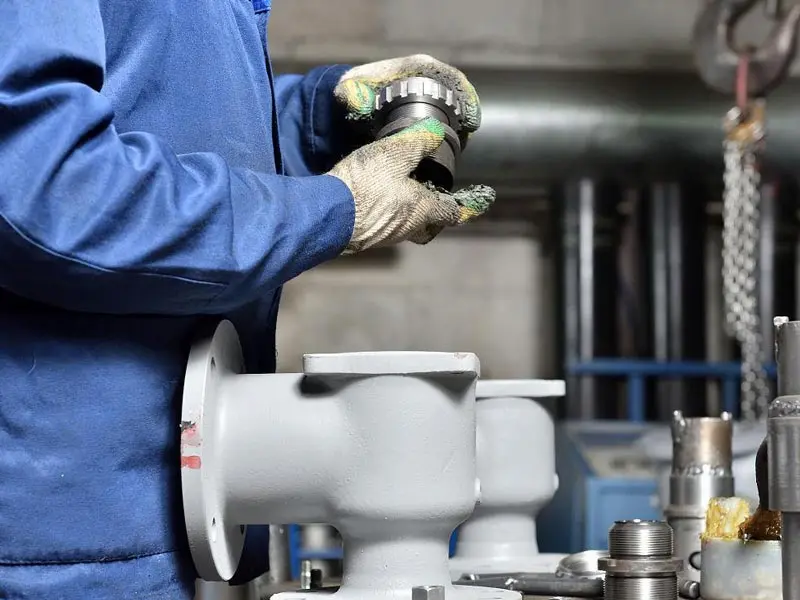
The reinforced diaphragm is fitted and tensioned by hand — the step that decides how the valve holds its set point over years of cycling.
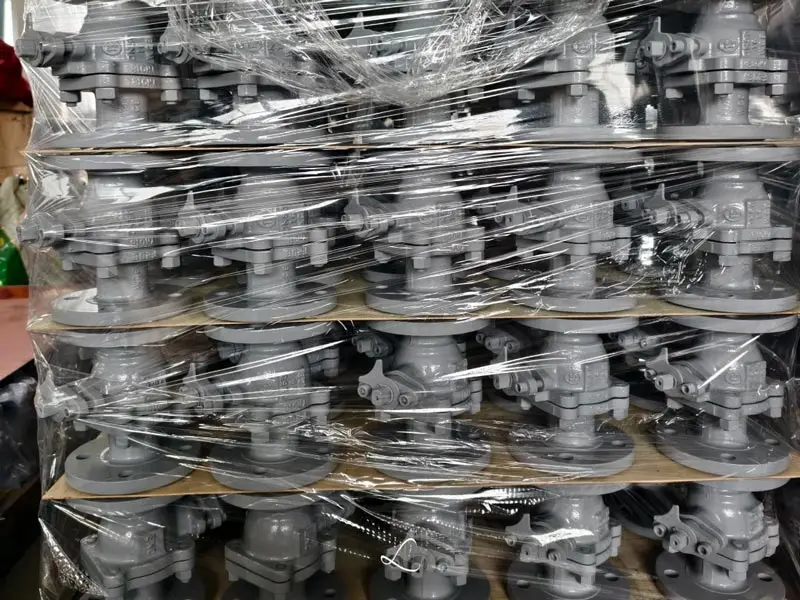
Inside and out, the valve is fusion-bonded epoxy coated to over 250 microns for buried and submerged service.
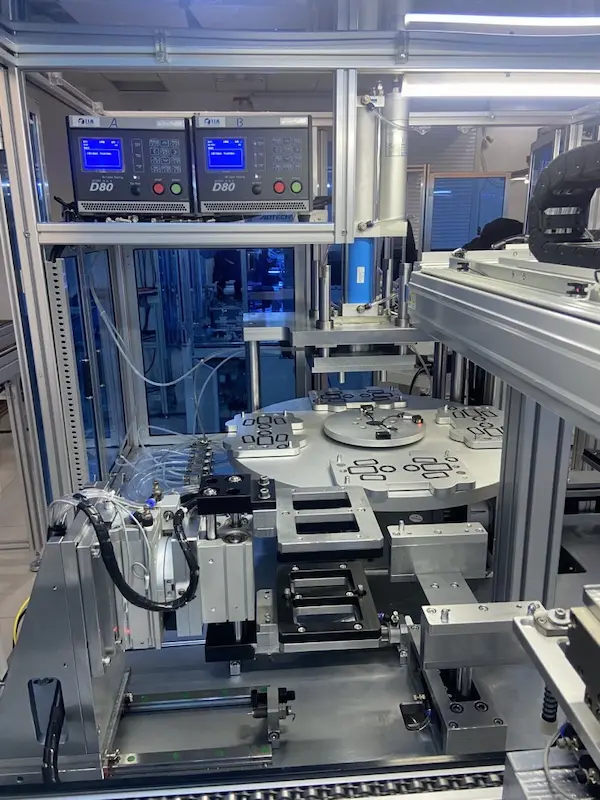
The pilot valve, needle valve, ball valves, strainer and gauge are piped onto the main valve and set to your pressure or level.
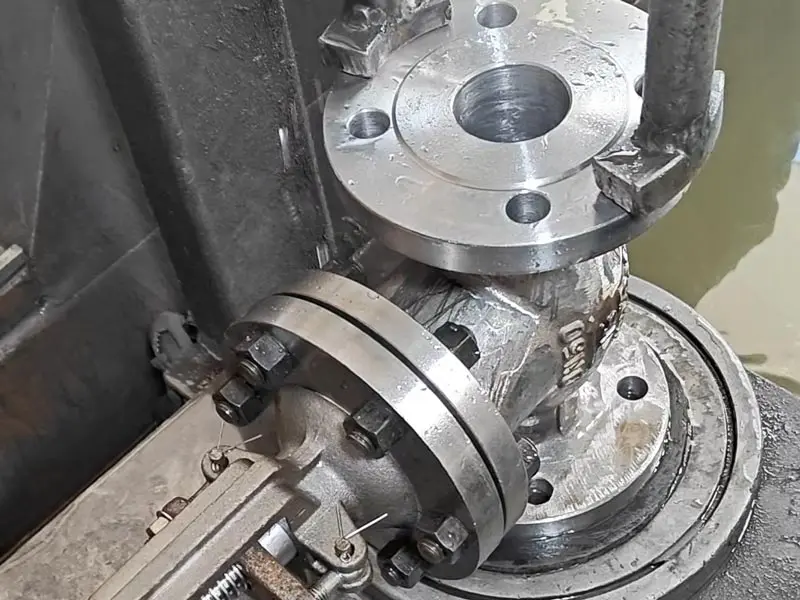
Every valve is pressure tested, then run on water to confirm it opens and closes at the set point before it's packed.
The machines and test benches on our floor that turn a casting into a valve rated for your line.
Machines the body, seat and bonnet faces to the tolerance the diaphragm needs to seal.
Shell and seat pressure testing on every valve body before assembly continues.
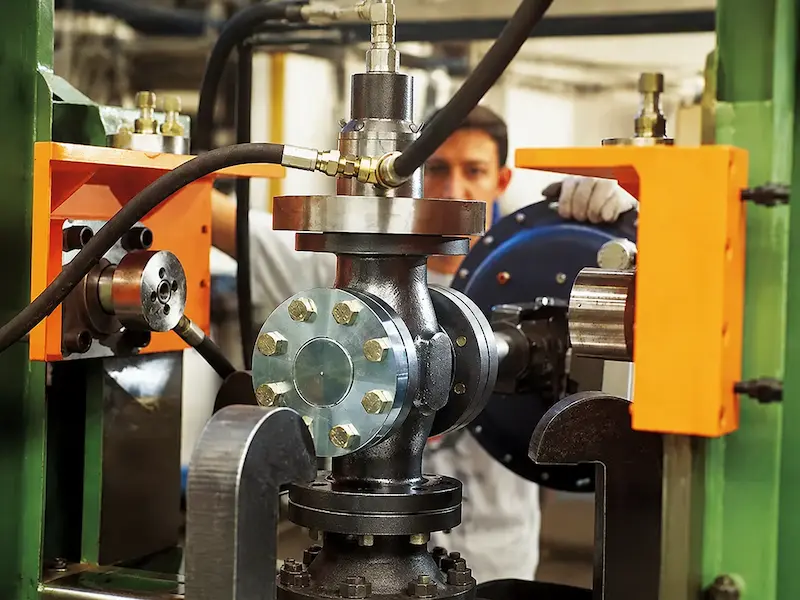
Runs water through the assembled valve to confirm it opens and closes at the set pressure or level.
Applies fusion-bonded epoxy to a controlled thickness, inside and out.
Bolts and seals the main valve and pilot circuit to the torque spec for each joint.
Manufacturing & Certifications
Built to eight international standards, CE and ISO 9001 certified, and backed by a 12-month warranty on every model.
View Certifications
How It Compares
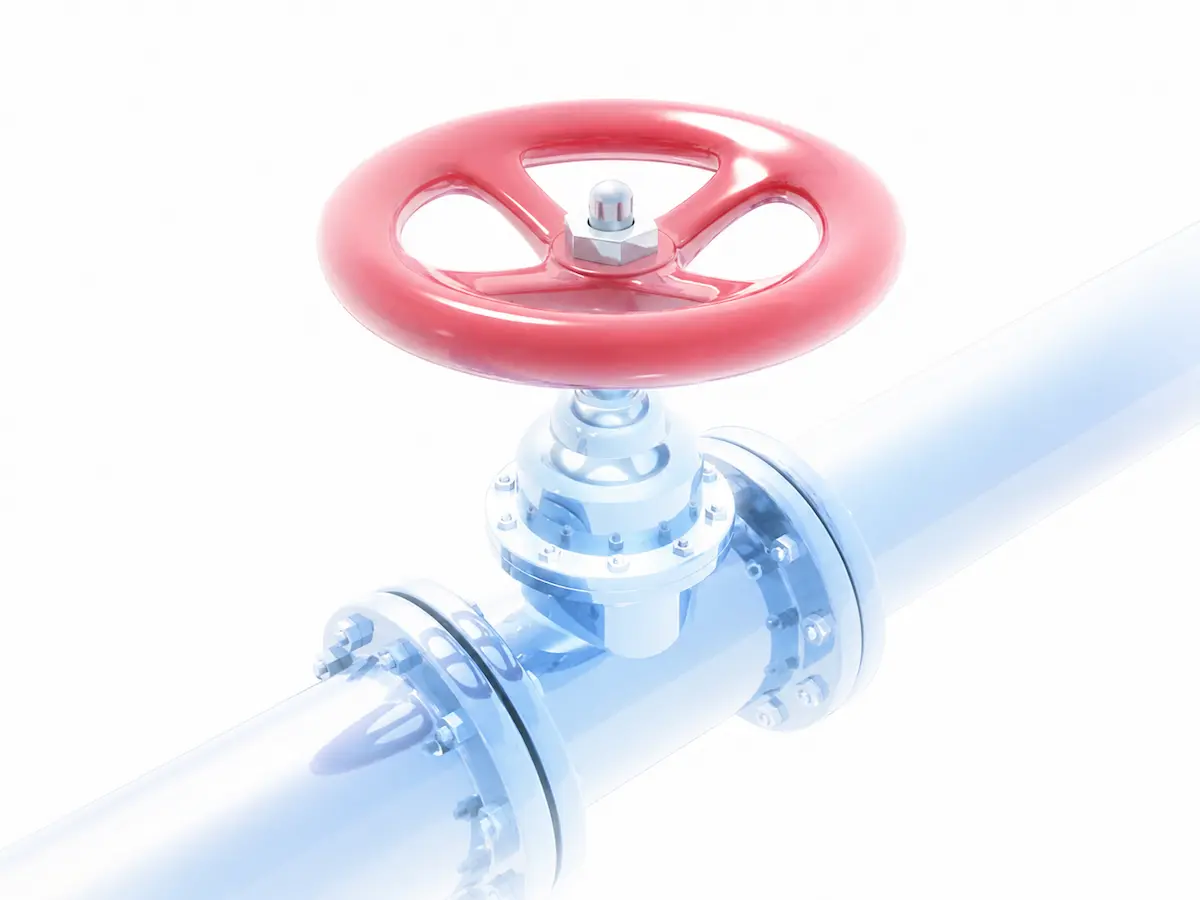
A hydraulic control valve holds a pressure, level or flow set point on its own. A gate or globe valve holds whatever position someone last left it in. A check valve only stops flow from reversing. Here is where each one fits.
| Dimension | Hydraulic Control Valve | Gate Valve | Globe Valve | Check Valve |
|---|---|---|---|---|
| Operation | Automatic — driven by line pressure through a pilot circuit | Manual handwheel or actuator | Manual handwheel or actuator | Automatic — driven by the flow itself |
| Set Point Control | Holds a pressure, level or flow set point continuously | None — fully open or fully shut | Position held where set, but not self-correcting | None — no set point, only open or shut |
| Self-Adjusting | Yes — reacts to changing line conditions with no input | No | No | No — reacts only to flow direction |
| Needs an Operator | No | Yes, to open, close or throttle | Yes, to open, close or throttle | No |
| Typical Duty | Pressure reduction, level control, flow limiting, pump control | Isolation — full open or full shut | Manual throttling and flow regulation | Backflow prevention |
| Best Fit | Where the set point has to hold without anyone watching it | Where the line just needs to be isolated for maintenance | Where an operator adjusts flow by hand, occasionally | Where flow only needs to be stopped from reversing |
On pump discharge, the 300X slow-closing check valve does the closing here — no pilot circuit, no adjustment, and no set point to hold. For mechanical swing, lift, dual-plate and ball check valves, see our check valve range.
A hydraulic control valve — also called an automatic control valve or pilot-operated control valve — uses the pressure already in the pipeline to regulate pressure, water level or flow on its own, with no electric or pneumatic actuator. In a water network it's the valve behind pressure-reducing zones, tank level control, pump discharge protection and fire main pressure management. The same term also turns up for actuated valves in hydraulic machinery — a different product built for oil-hydraulic circuits, not water lines, so check which one a supplier is quoting you.
No — it runs entirely on the water pressure already in the line. A small pilot circuit bleeds pressure into and out of a control chamber above the diaphragm, and that pressure difference is what opens and closes the main valve. That's the difference from an electrically or pneumatically actuated control valve, which needs a power or air supply to drive the actuator.
A pressure reducing valve controls the pressure downstream of the valve, holding it at a set point no matter how the upstream pressure varies. A pressure sustaining valve does the opposite — it holds the pressure upstream, opening to relieve excess or closing to protect a pump or a weak section of pipe. Both use the same pilot-operated mechanism; only the side of the valve the pilot is sensing is different.
An altitude valve senses the water level in the tank through a pilot line and closes once the level reaches the set point — typically shutting a set differential, around a metre, before the tank is completely full, then reopening as the level drops. Because it's pilot-operated, no float switch or control signal is needed at the tank itself; a control filter ahead of the pilot keeps debris out of the small pilot passages.
Chatter or hunting usually comes down to sizing, not a faulty valve. An undersized valve can't pass enough flow even fully open, so it hunts trying to keep up with demand; an oversized valve is forced to run nearly shut at low flow, where high velocity across a small opening makes the disc bounce. A torn diaphragm, worn seat or the wrong pilot spring range can cause the same symptom. Where the pressure drop itself is large enough to cause cavitation, the fix is correct valve sizing or anti-cavitation trim on a single valve — not simply adding a second valve in series.
A pump control valve opens as soon as it senses the pressure drop from a pump stopping, releasing the returning pressure wave before it can slam back through the line, then closes slowly so it doesn't create a second surge on its own. That's different from a check valve, which only reacts after flow has already reversed — the pump control valve acts ahead of the surge instead of against it.
We're a manufacturer. Our ISO 9001 certificate scope covers manufacturing, not trading, and the documents that ship with your order — material certificates, pressure test reports, pilot setting records — trace back to specific steps on our own production line, not a supplier's paperwork we're passing along.
Payment and shipping terms are confirmed on the quotation for your order. Tell us your destination and the incoterm you need, and we'll confirm terms against it.
Request a quote
Send us the medium, size and pressure for your project. Our engineers reply with a valve recommendation, a datasheet and a quotation.
Prefer email or WhatsApp? lucas@zpvevlave.com · +86 182 0323 5561
ZPVEVLAVE · Industrial Valve Manufacturer
Contact ZPVEVLAVE for industrial valve enquiries, technical information, project quotations and ordersupport.
+86 18203235561
lucas@zpvevlave.com